
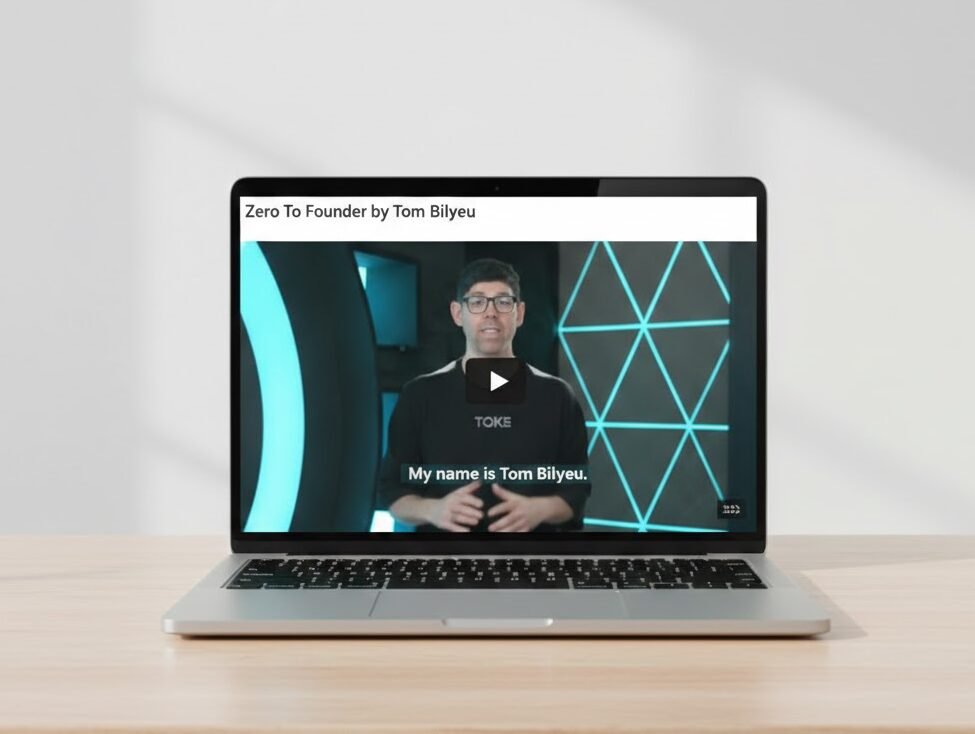
Tom Bilyeu – Zero to Founder: The Complete Blueprint for Building From Nothing to Impact
Introduction
Entrepreneurship often looks glamorous from the outside, but every successful founder once started at zero. Tom Bilyeu – Zero to Founder represents more than just a course or concept—it symbolizes the mindset shift, strategic thinking, and disciplined execution required to go from no business experience to building something meaningful. Inspired by the entrepreneurial philosophy of Tom Bilyeu, this framework focuses on identity transformation, skill acquisition, market validation, and scalable execution.
The journey from zero to founder isn’t about luck. It’s about clarity, resilience, systems, and continuous learning. In this guide, we’ll break down the Zero to Founder methodology, its core pillars, growth strategies, mindset shifts, and practical steps to help aspiring entrepreneurs build real businesses from scratch.
1. Understanding the “Zero to Founder” Concept
1.1 What Does “Zero” Really Mean?
“Zero” doesn’t mean failure. It means:
-
No product
-
No revenue
-
No audience
-
No team
-
No clear direction
Many aspiring entrepreneurs stay stuck here because they overthink instead of execute. The Zero to Founder philosophy emphasizes action over perfection.
1.2 What Defines a Founder?
A founder is someone who:
-
Identifies a problem worth solving
-
Creates a solution
-
Builds systems to deliver that solution
-
Takes ownership of outcomes
The transformation outlined in Tom Bilyeu – Zero to Founder is about moving from consumer mindset to creator mindset.
2. The Core Pillars of the Zero to Founder Framework
To transition successfully, you need structured principles. The Zero to Founder roadmap can be broken into five foundational pillars.
2.1 Identity & Mindset Shift
Tom Bilyeu frequently emphasizes identity transformation. Before building a business, you must:
-
Adopt a growth mindset
-
Embrace discomfort
-
Develop resilience
-
Shift from fixed beliefs to learning-driven thinking
The Zero to Founder journey begins internally. You must see yourself as someone capable of building value.
2.2 Skill Acquisition Strategy
From zero, skills are your leverage. Focus on:
-
Sales and persuasion
-
Communication
-
Marketing fundamentals
-
Product validation
-
Financial literacy
The Zero to Founder approach prioritizes learning skills that directly impact revenue rather than consuming random information.
2.3 Problem Identification & Market Fit
A founder doesn’t build what they love; they build what solves problems.
Steps include:
-
Identify a niche or underserved market
-
Research pain points
-
Validate demand
-
Create a minimum viable product (MVP)
The Tom Bilyeu-inspired methodology emphasizes solving meaningful problems over chasing trends.
2.4 Execution & Systems
Ideas don’t scale—systems do.
Key systems for founders:
-
Lead generation funnel
-
Sales process
-
Customer onboarding
-
Delivery workflow
-
Feedback loops
Without structure, growth collapses under its own weight.
2.5 Long-Term Vision & Culture
A founder must think long-term:
-
Brand positioning
-
Core values
-
Community building
-
Team development
The Zero to Founder philosophy stresses building something sustainable rather than chasing quick wins.
3. Step-by-Step: Going From Zero to Founder
Here’s a structured roadmap inspired by the Tom Bilyeu entrepreneurial mindset:
Step 1: Define Your “Why”
Clarity fuels persistence. Ask:
-
What problem do I want to solve?
-
Why does this matter to me?
-
Who does this help?
Without emotional connection, execution fades.
Step 2: Choose a Monetizable Skill
From zero, the fastest way forward is skill monetization. Examples:
-
Copywriting
-
Consulting
-
Coaching
-
Freelance design
-
Digital marketing
-
Software development
Start lean. Revenue creates momentum.
Step 3: Validate With Small Wins
Instead of building something massive:
-
Offer services manually
-
Collect testimonials
-
Refine your offer
-
Raise prices gradually
The Zero to Founder framework promotes iteration over perfection.
Step 4: Build a Simple Offer
A clear offer answers:
-
Who is it for?
-
What result does it deliver?
-
How long does it take?
-
What makes it unique?
Keep it focused and measurable.
Step 5: Create Predictable Lead Flow
Founders must master visibility:
-
Social media content
-
Email marketing
-
Paid ads (when profitable)
-
Strategic partnerships
-
SEO-driven content
Consistency matters more than virality.
Step 6: Systemize & Scale
When revenue stabilizes:
-
Document processes
-
Automate repetitive tasks
-
Hire contractors
-
Focus on high-leverage decisions
This is the turning point from solo operator to true founder.
4. Mindset Lessons from Tom Bilyeu’s Entrepreneurial Philosophy
4.1 Embrace Pain as a Teacher
Growth comes from discomfort. The Zero to Founder path includes rejection, setbacks, and failures. Instead of avoiding pain, use it as feedback.
4.2 Focus on Skill Stacking
Instead of trying to be the best in one area, combine:
-
Communication + marketing
-
Sales + psychology
-
Product development + branding
Skill stacking multiplies opportunity.
4.3 Value Creation First, Money Second
Revenue is a byproduct of value. The Zero to Founder concept focuses on solving real problems consistently.
5. Common Mistakes in the Zero to Founder Journey
Many entrepreneurs stall because of predictable errors.
5.1 Waiting for Perfect Conditions
You don’t need:
-
A big budget
-
A large audience
-
Fancy branding
You need action.
5.2 Overcomplicating Offers
Complexity kills clarity. Simple offers convert better.
5.3 Avoiding Sales
Founders must sell. Communication and persuasion are non-negotiable.
5.4 Scaling Without Systems
Growth without structure leads to burnout and chaos.
6. Revenue Models for New Founders
Depending on skills and goals, founders can start with:
-
Service-based business
-
Digital products (courses, templates)
-
Coaching programs
-
Subscription memberships
-
E-commerce
-
SaaS
The Zero to Founder transformation isn’t tied to one model. It’s tied to execution discipline.
7. Metrics to Track as a New Founder
From day one, track:
-
Customer acquisition cost
-
Conversion rates
-
Monthly revenue
-
Profit margins
-
Customer satisfaction
-
Retention rate
Data turns guesses into strategies.
8. Building Confidence Through Action
Confidence doesn’t come before action—it comes after repeated attempts.
The Zero to Founder journey is built on:
-
Daily improvement
-
Continuous learning
-
Consistency over intensity
-
Strategic reflection
Over time, small wins compound into sustainable businesses.
9. Scaling Beyond Founder Stage
Once stable:
-
Develop leadership skills
-
Build culture
-
Focus on brand authority
-
Explore strategic partnerships
-
Invest in personal growth
The founder stage is only the beginning.
10. The Long-Term Impact of Zero to Founder
True success isn’t just financial. It’s:
-
Freedom of time
-
Purpose-driven work
-
Influence and impact
-
Skill mastery
-
Personal transformation
The philosophy behind Tom Bilyeu – Zero to Founder highlights transformation as the ultimate reward.
Conclusion
The journey from zero to founder is not reserved for a select few. It’s available to anyone willing to learn, execute, adapt, and persist. Inspired by the entrepreneurial mindset of Tom Bilyeu, the Zero to Founder framework provides clarity in the chaos of starting a business.
By focusing on skill acquisition, problem-solving, execution systems, and long-term thinking, you can transform uncertainty into opportunity. Start small, stay consistent, build value—and step confidently into your role as a founder.



Reviews
There are no reviews yet.