
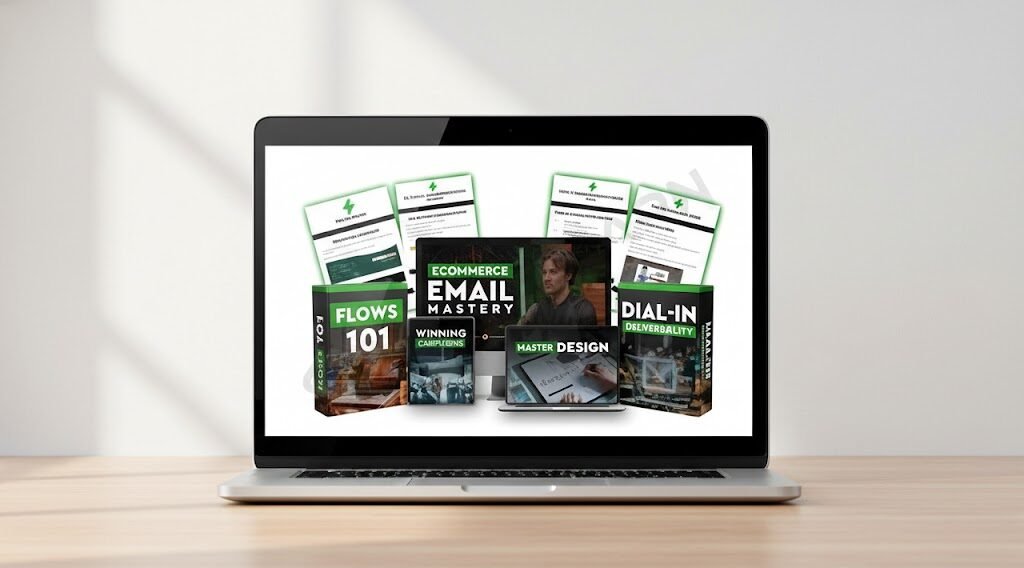
Max Sturtevant – Ecommerce Email Mastery: The Complete Guide to Scaling Revenue with Email Marketing
Introduction
Email marketing remains one of the highest-ROI channels in ecommerce, yet most brands fail to unlock its true potential. This is where Max Sturtevant – Ecommerce Email Mastery stands out as a proven framework for turning email into a predictable revenue engine. Rather than relying on guesswork or outdated tactics, this approach focuses on strategy, psychology, automation, and lifecycle marketing.
The foundation of ecommerce success today is not just traffic—it’s retention, customer lifetime value, and repeat purchases. With the principles taught in Ecommerce Email Mastery, brands can transform abandoned carts, inactive subscribers, and first-time buyers into long-term customers. This guide explores the methodology, systems, and strategies that make email marketing a dominant growth channel for ecommerce businesses.
1. Understanding Ecommerce Email Mastery
1.1 What Is Ecommerce Email Mastery?
Ecommerce Email Mastery is a structured approach to building, optimizing, and scaling email marketing systems for online stores. Instead of sending random promotional emails, the framework emphasizes segmentation, automation, personalization, and behavioral triggers.
The Max Sturtevant – Ecommerce Email Mastery model focuses on creating a customer journey where every email serves a purpose—educating, nurturing, converting, or re-engaging subscribers. The goal is to turn email from a support channel into a core profit center.
1.2 Why Email Marketing Dominates Ecommerce Growth
Unlike paid ads, email allows brands to communicate directly with customers who already trust them. Benefits include:
-
High return on investment
-
Ownership of audience (not dependent on ad platforms)
-
Ability to personalize at scale
-
Automation-driven revenue
-
Long-term brand loyalty
This is why ecommerce brands that adopt an email-first mindset consistently outperform competitors.
2. Core Pillars of the Max Sturtevant Framework
2.1 List Building with Intent
Quality always beats quantity. A key principle in Ecommerce Email Mastery is building a list of engaged subscribers rather than chasing raw numbers.
Effective list-building strategies include:
-
High-converting opt-in offers
-
Exit-intent popups
-
Discount and value-based lead magnets
-
SMS and email hybrid capture
-
Post-purchase opt-ins
Each subscriber should enter your ecosystem with clear intent.
2.2 Strategic Segmentation
Segmentation is the backbone of advanced email marketing. Instead of blasting the same message to everyone, segmentation allows targeted communication based on behavior and preferences.
Common segmentation strategies:
-
First-time buyers vs repeat buyers
-
High-value customers
-
Browsing behavior
-
Purchase history
-
Engagement level
This segmentation-driven approach ensures emails stay relevant, increasing open rates and conversions.
2.3 Email Automation Systems
One of the strongest advantages of Max Sturtevant – Ecommerce Email Mastery is its emphasis on automation. Once set up, these flows generate revenue continuously.
Essential ecommerce automations include:
-
Welcome sequences
-
Abandoned cart recovery
-
Browse abandonment
-
Post-purchase education
-
Review request flows
-
Win-back campaigns
These systems allow brands to scale without increasing workload.
3. Copywriting Psychology That Converts
3.1 Writing Emails That Sell Without Sounding Salesy
Great ecommerce email copy focuses on clarity, emotion, and benefits rather than hype. The framework emphasizes:
-
Conversational tone
-
Clear value propositions
-
Story-driven messaging
-
Objection handling
-
Simple calls to action
Emails should feel like a personal message—not an advertisement.
3.2 Subject Lines That Drive Opens
No matter how good your email is, it won’t convert if it isn’t opened. Ecommerce Email Mastery places heavy emphasis on subject line testing.
Effective subject lines often include:
-
Curiosity gaps
-
Personalization
-
Social proof
-
Urgency (used carefully)
-
Short, mobile-friendly formats
Consistent testing improves performance over time.
4. Campaign Strategy vs Flow Strategy
4.1 Revenue from Automated Flows
In top-performing ecommerce brands, 30–60% of email revenue comes from automated flows. These emails work in the background, triggered by user behavior.
Key benefits:
-
Always-on revenue
-
Personalized timing
-
High relevance
-
Minimal maintenance once optimized
Automation is a non-negotiable pillar of scalable email systems.
4.2 Promotional Campaigns That Don’t Burn the List
Campaigns still play an important role, but they must be used strategically. Over-sending promotions can cause fatigue and unsubscribes.
Best practices include:
-
Balancing value and promotion
-
Segmenting campaign recipients
-
Using storytelling instead of discounts alone
-
Aligning campaigns with launches or seasons
This balance protects long-term list health.
5. Deliverability & Technical Foundations
5.1 Inbox Placement Matters
Even the best emails fail if they land in spam. Ecommerce Email Mastery addresses deliverability fundamentals such as:
-
Domain authentication (SPF, DKIM, DMARC)
-
Warming up sending domains
-
Managing engagement metrics
-
Removing inactive subscribers
Clean lists equal better inbox placement.
5.2 Choosing the Right Email Platform
The framework works best with ecommerce-focused ESPs that support deep automation and segmentation.
Key features to look for:
-
Behavioral triggers
-
Ecommerce integrations
-
Advanced analytics
-
Personalization capabilities
Technology supports strategy, not the other way around.
6. Metrics That Actually Matter
Instead of vanity metrics, the Max Sturtevant – Ecommerce Email Mastery approach prioritizes meaningful performance indicators:
-
Revenue per subscriber
-
Email-driven conversion rate
-
Flow revenue percentage
-
Customer lifetime value
-
Engagement trends
Tracking these metrics ensures decisions are data-driven.
7. Scaling Email as a Growth Channel
Once the foundations are in place, scaling becomes systematic:
-
Increasing list acquisition
-
Improving flow performance
-
Expanding segmentation
-
Testing new messaging angles
-
Integrating email with SMS
Email becomes a predictable growth lever rather than an afterthought.
8. Common Ecommerce Email Mistakes
Avoiding these mistakes is essential for success:
-
Sending too many generic promotions
-
Ignoring segmentation
-
Overloading emails with images
-
Weak calls to action
-
Neglecting post-purchase communication
Fixing these gaps alone can dramatically improve results.
9. Long-Term Brand Building Through Email
Beyond sales, email plays a major role in brand loyalty. Consistent, valuable communication builds trust and authority.
Effective brand-building emails include:
-
Founder stories
-
Educational content
-
Behind-the-scenes insights
-
Customer success stories
This emotional connection increases repeat purchases.
10. Why Ecommerce Brands Choose Email Mastery
The long-term advantage of Max Sturtevant – Ecommerce Email Mastery lies in sustainability. While ads fluctuate and costs rise, email remains controllable and profitable.
Brands that invest in email systems:
-
Reduce dependency on paid traffic
-
Increase customer lifetime value
-
Build direct customer relationships
-
Create predictable revenue streams
This makes email mastery a competitive advantage.
Conclusion
Ecommerce growth isn’t just about getting more traffic—it’s about maximizing the value of every customer. Max Sturtevant – Ecommerce Email Mastery provides a proven roadmap for transforming email into a scalable, automated revenue engine. Through segmentation, automation, psychology-driven copy, and data-backed optimization, brands can unlock consistent growth without increasing ad spend.
When executed correctly, email becomes the most powerful asset in any ecommerce business—driving retention, loyalty, and long-term profitability.


Reviews
There are no reviews yet.