
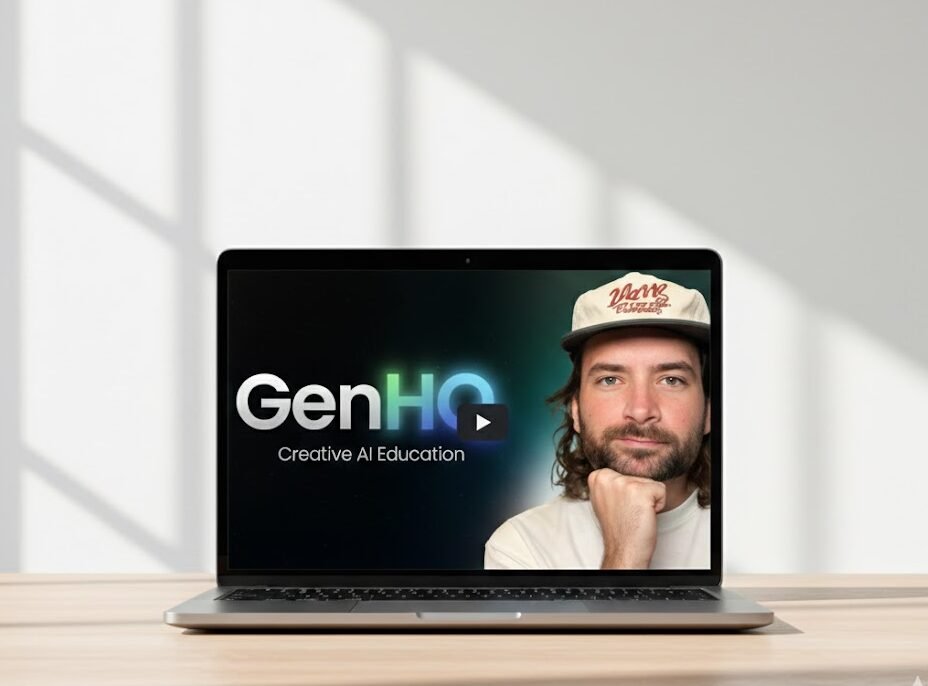
GenHQ – Creative AI Education: The Future of Learning in the Age of Artificial Intelligence
Introduction
Artificial Intelligence is no longer a futuristic concept — it is actively transforming industries, reshaping careers, and redefining creativity. As automation becomes mainstream, the need for structured, accessible, and practical AI learning platforms is growing rapidly. That’s where GenHQ – Creative AI Education emerges as a powerful concept: a modern framework that combines artificial intelligence training with creative skill development.
Instead of treating AI as a purely technical field, this approach focuses on empowering creators, entrepreneurs, educators, and professionals to harness AI tools in innovative ways. From AI-generated art and design to automated content systems and intelligent workflows, creative AI learning is unlocking new opportunities across industries.
In this comprehensive guide, we’ll explore what makes this model unique, how creative AI education works, who it benefits, and why it represents the next evolution in digital learning.
What Is Creative AI Education?
Creative AI education blends artificial intelligence training with hands-on creative application. Rather than focusing only on coding or machine learning theory, it emphasizes:
-
AI content creation
-
Generative design tools
-
Automation workflows
-
AI-driven marketing
-
Prompt engineering
-
Digital product development
-
Creative problem solving with AI
The idea behind GenHQ – Creative AI Education is to bridge the gap between technical AI knowledge and real-world creative execution.
This model enables learners to apply AI tools immediately — whether for graphic design, copywriting, video production, music composition, data storytelling, or business automation.
Why Creative AI Learning Is in High Demand
Several global trends are driving demand for AI-focused education:
1. Automation Across Industries
Marketing, design, coding, writing, and analytics are increasingly supported by AI systems.
2. Creator Economy Growth
Independent creators need AI to scale content production efficiently.
3. Business Efficiency Demands
Companies seek professionals who can integrate AI into workflows.
4. Remote & Online Education Expansion
Flexible digital learning platforms are becoming the norm.
Because of these shifts, platforms aligned with the GenHQ – Creative AI Education philosophy are positioned at the intersection of creativity and technology.
Core Pillars of a Creative AI Education Framework
To understand how such a system operates, let’s break down the essential pillars.
1. Foundational AI Literacy
Every learner must understand:
-
What AI is and how it works
-
The basics of machine learning
-
Ethical AI considerations
-
Data fundamentals
-
Generative AI models
This foundational knowledge prevents misuse and encourages responsible implementation.
2. Prompt Engineering & AI Communication
Prompt engineering is one of the most valuable creative AI skills.
It involves:
-
Structuring effective instructions
-
Context optimization
-
Output refinement
-
Iterative improvement
-
Style conditioning
In creative industries, the ability to guide AI tools properly determines output quality. This is a core component of GenHQ – Creative AI Education methodologies.
3. AI Content Creation Systems
Creative AI education includes:
-
AI-assisted copywriting
-
Blog automation workflows
-
Video script generation
-
Social media content scaling
-
Graphic generation
-
Voice synthesis
-
AI-powered editing tools
Students learn how to create consistent content pipelines rather than isolated outputs.
4. AI for Design & Multimedia
Generative AI has revolutionized visual creation. Education programs often include:
-
AI art creation
-
Branding mockups
-
Motion graphics
-
Video generation
-
Sound design
By integrating design with automation, creative professionals increase production speed while maintaining originality.
5. Automation & Workflow Integration
AI is most powerful when embedded into systems.
Education in this area includes:
-
Marketing automation
-
CRM integrations
-
Email AI assistants
-
Data dashboards
-
AI chatbots
-
Process optimization
Teaching how to integrate AI into workflows ensures long-term value.
Who Benefits from Creative AI Education?
The appeal of GenHQ – Creative AI Education extends across multiple audiences:
Entrepreneurs
Leverage AI for marketing, content creation, and operational efficiency.
Freelancers
Offer AI-powered services such as content automation, chatbot setup, or AI design.
Content Creators
Scale video, blog, and social media output with AI support.
Educators
Integrate AI tools into modern teaching methodologies.
Corporate Teams
Improve productivity through automation and AI-driven decision support.
Students
Gain competitive skills that align with future job markets.
The Competitive Advantage of Creative AI Skills
AI literacy alone is not enough. The real competitive edge comes from creative implementation.
Professionals who understand:
-
How to generate ideas with AI
-
How to refine AI outputs
-
How to monetize AI skills
-
How to automate repetitive tasks
… will outperform those who rely solely on manual methods.
This applied learning approach differentiates a creative AI education framework from purely theoretical AI courses.
Real-World Applications
Here are practical use cases of creative AI training:
-
Building AI-generated online courses
-
Creating automated YouTube channels
-
Designing digital art collections
-
Launching AI-driven newsletters
-
Developing marketing funnels
-
Generating eBooks and digital products
-
Automating client onboarding systems
These real-world implementations demonstrate how AI education can become income-generating rather than purely academic.
Curriculum Structure Example
A structured creative AI education program may include:
Module 1: AI Foundations & Ethics
Module 2: Prompt Engineering Mastery
Module 3: AI Content Automation
Module 4: Generative Design & Media Tools
Module 5: AI Business Monetization Models
Module 6: Automation & Workflow Systems
Module 7: Scaling Creative AI Projects
This layered curriculum ensures both understanding and execution.
Common Challenges in Learning AI Creatively
While demand is growing, learners face obstacles:
-
Tool overwhelm
-
Rapid technological updates
-
Information overload
-
Inconsistent output quality
-
Ethical concerns
-
Fear of automation replacing jobs
Structured education helps navigate these challenges effectively.
The Future of Creative AI Education
The next phase of AI learning will likely include:
-
Personalized AI tutors
-
Adaptive learning platforms
-
Immersive AR/VR AI simulations
-
Collaborative AI-human creative ecosystems
-
AI entrepreneurship incubators
As technology evolves, educational platforms aligned with GenHQ – Creative AI Education principles will emphasize continuous skill adaptation.
Why Creative AI Education Is a Long-Term Asset
Investing in AI education provides:
-
Career resilience
-
Increased productivity
-
Scalable income opportunities
-
Digital asset creation
-
Global remote work flexibility
Rather than viewing AI as a threat, creative education reframes it as an empowerment tool.
Building a Career with Creative AI Skills
Here are potential income paths:
-
AI consultant
-
Prompt engineer
-
AI content strategist
-
Automation specialist
-
AI marketing expert
-
Generative artist
-
Digital course creator
-
AI integration advisor
These emerging roles demonstrate how creative AI expertise translates directly into financial opportunities.
Final Thoughts
The rapid evolution of artificial intelligence requires more than passive awareness — it demands active, creative adaptation. The framework represented by GenHQ – Creative AI Education highlights a shift from theoretical AI learning to applied, monetizable skill-building.
By combining foundational AI literacy, prompt engineering, content automation, design innovation, and workflow integration, creative AI education empowers individuals to thrive in a digital-first economy.
As AI continues reshaping industries, those equipped with creative implementation skills will lead the transformation — not follow it.
The future belongs to learners who can blend imagination with intelligent automation.



Reviews
There are no reviews yet.